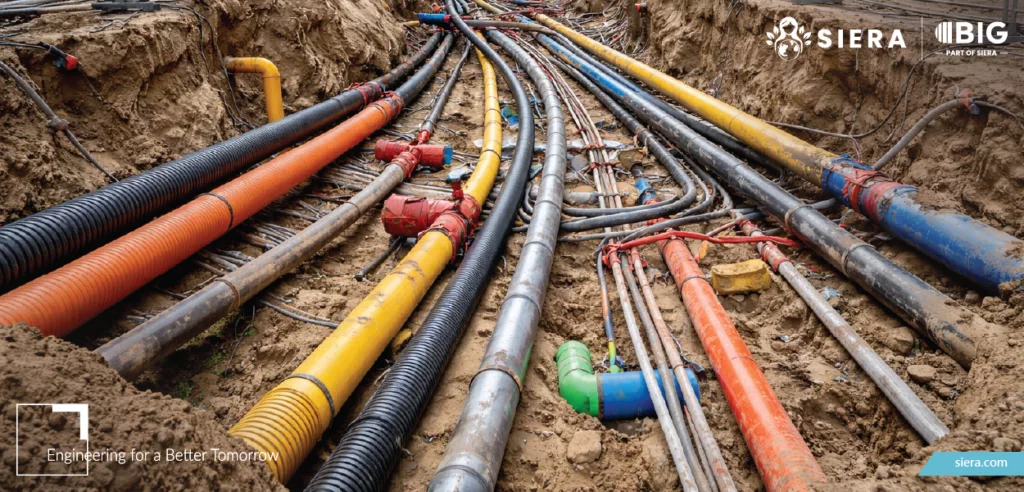



Beim Bau von Rohrleitungen und bei Arbeiten an Ver- und Entsorgungsnetzen fällt regelmäßig Aushubmaterial an, das oft nicht vollständig wieder eingebaut werden kann. Für Bauunternehmen wird es immer schwieriger, geeignete Entsorgungsmöglichkeiten für dieses überschüssige Material zu finden. Besonders herausfordernd ist die Situation, wenn es sich nur um Kleine Mengen an mineralischen Abfällen Geschäfte.
Auf vielen Baustellen fallen nur ein paar Kubikmeter Material an. Trotzdem müssen auch diese Mengen bewertet und einer geeigneten Entsorgung oder Wiederverwertung zugeführt werden. Die dafür erforderlichen Probenahmen und Untersuchungen können jedoch unverhältnismäßig zeit- und kostenintensiv sein.
Außerdem sind viele Baumaßnahmen nicht langfristig planbar. Besonders bei Störungsbeseitigung an Versorgungsleitungen oder kurzfristige Reparaturarbeiten, ist eine Voruntersuchung oft nicht möglich. Dies führt zu zusätzlichen organisatorischen und wirtschaftlichen Kosten.
Eine praktische Lösung für dieses Problem wurde von der Bund/Länder-Arbeitsgemeinschaft Abfall (LAGA) entwickelt worden. Darin wird ein angemessenes und rechtskonformes Verfahren für den Umgang mit kleinen Mengen mineralischer Abfälle in der LAGA-Mitteilung 32 (PN 98) und die zusätzliche Leitfaden zu LAGA PN 98.
Bei der Umsetzung solcher Lösungen müssen die Prof. Burmeier Ingenieurgesellschaft mbH - Teil von SIERA-Bündnis Bauunternehmen, Infrastrukturbetreiber und Kommunen mit technischem Fachwissen im Bereich der Abfallwirtschaft.
Herausforderungen beim Umgang mit kleinen Mengen an mineralischen Abfällen
Beim Infrastrukturbau und bei Rohrleitungsarbeiten fallen oft mineralische Rückstände an, die nicht vollständig wiederverwendet werden können. Typische Beispiele sind
- Aushubmaterial aus Rohrgräben
- Straßenabriss
- Betonreste
- Material Naturstein
- Pflastersteine oder Bordsteinkanten
Die Entsorgung dieser Materialien wird besonders komplex, wenn nur kleine Mengen von einzelnen Baustellen entstehen.
Wirtschaftliche Herausforderungen
Kleine Mengen an Material führen oft zu unverhältnismäßig hohen Kosten für:
- Probenahme und Analyse
- Transport und Entsorgung
- organisatorische Koordination
Technische Herausforderungen
Auch technische Aspekte machen es schwierig, kleine Mengen zu handhaben:
- Unterschiedliche Materialzusammensetzungen
- Fehlende Voruntersuchungen
- Begrenzte Entsorgungsmöglichkeiten
Gesetzliche Anforderungen
Gleichzeitig müssen zahlreiche gesetzliche Bestimmungen eingehalten werden, zum Beispiel:
- Anforderungen des Kreislaufwirtschaftsgesetzes
- Dokumentationspflichten
- Verbot der Vermischung von Abfällen
Ein strukturierter Ansatz ist daher entscheidend, um sowohl die wirtschaftlichen als auch die rechtlichen Anforderungen zu erfüllen.
LAGA-Spezifikationen als praktische Lösung
Mit dem LAGA-Mitteilung 32 (PN 98) und ein ergänzender Leitfaden haben einen Rahmen geschaffen, der den Umgang mit kleinen Mengen mineralischer Abfälle deutlich erleichtert.
Ein zentraler Bestandteil dieser Empfehlung ist die Möglichkeit,, Kleine Mengen der gleichen Abfallarten kombinieren, um eine gemeinsame Prüfung und Entsorgung zu ermöglichen.
Mit diesem Ansatz werden mehrere Ziele verfolgt:
- Höhere Effizienz bei der Probenahme
- Wirtschaftlichere Entsorgung
- Bessere Recyclingmöglichkeiten für mineralische Materialien
Die praktische Umsetzung solcher Konzepte ist einer der Tätigkeitsbereiche der Prof. Burmeier Ingenieurgesellschaft mbH - Teil von SIERA-Bündnis, die Bauprojekte im Bereich der Abfallwirtschaft und Materialbewertung unterstützt.
Kleine Mengen zu Haufen zusammenlegen
Nach den Empfehlungen der LAGA können mineralische Abfälle einer Abfallart, die von verschiedenen Baustellen stammen, in einem geeigneten Gebiet zusammengeführt werden.
Kleine Mengen können ohne vorherige Prüfung von der Baustelle entfernt und zu einem Stapel zusammengefasst werden.
Die wichtigsten Rahmenbedingungen sind in der folgenden Übersicht dargestellt.
| Parameter | Standard |
| Maximales Gewicht pro Einzelmenge | bis zu 20 Tonnen |
| Maximales Volumen pro Einzelmenge | bis zu 15 m³ |
| Maximales Volumen einer Lagereinheit | bis zu 200 m³ |
| Zweck | Gemeinsame Probenahme und Entsorgung |
Dieser Ansatz macht die Probenahme effizienter und wirtschaftlicher und verbessert gleichzeitig die Nutzungsmöglichkeiten.
Voraussetzungen für den Zusammenschluss
Damit die Konsolidierung von Kleinmengen genehmigt werden kann, müssen mehrere Bedingungen erfüllt sein.
Organoleptische Prüfung
Zuallererst muss sichergestellt werden, dass Ungefährlicher Abfall beteiligt ist. Dies geschieht durch einen organoleptischen Test, bei dem unter anderem die folgenden Merkmale bewertet werden:
- Geruch
- Farbe
- Sichtbare Fremdkörper
Diese erste Einschätzung dient als Plausibilitätsprüfung.
Ausschluss von unerlaubter Vermischung
Die Vermischung darf nicht dazu führen, dass die Schadstoffwerte durch die Vermischung erhöht werden Verdünnt werden.
Deshalb:
- Materialien mit unterschiedlichen Belastungen müssen getrennt aufbewahrt werden
- der Zusammenschluss darf nur organisatorischen Zwecken dienen
Umgang mit kontaminierten Materialien
Wenn es Hinweise auf erhöhte Schadstoffbelastungen gibt - zum Beispiel durch Fremdbestandteile - müssen diese Materialien analysiert werden:
- Getrennt gelagert
- analysiert
- bewertet werden
Die Vermischungsverbot nach § 9 Abs. 2 Satz 2 KrWG schließt in solchen Fällen die Möglichkeit der Zusammenlegung mit anderen Abfällen aus.
Probenahme nach LAGA PN 98
Nach der Bildung eines Pfahls wird die Probenahme nach den Vorgaben der
LAGA-Mitteilung 32 (PN 98).
Die Anzahl der erforderlichen Proben hängt von der Volumen des Stapels.
Die Ziele dieser Studie sind
- Bewertung der Materialqualität
- Bestimmung der geeigneten Entsorgungswege
- Sicherstellung einer rechtskonformen Behandlung
Im Rahmen solcher Untersuchungen werden die Prof. Burmeier Ingenieurgesellschaft mbH - Teil von SIERA-Bündnis Bauprojekte bei der professionellen Probenahme und Bewertung von mineralischen Abfällen.
Sortenreine Abfuhr von verschiedenen Abfallarten
Neben der Konsolidierung kleinerer Mengen wird auch die Getrennte Entnahme von Materialien ein wichtiger Bestandteil einer effizienten Abfallwirtschaft.
Wenn es technisch möglich und wirtschaftlich vertretbar ist, sollten verschiedene Materialien bei der Beseitigung getrennt werden.
Dabei muss eine besondere Unterscheidung getroffen werden:
- Asphalt fertigstellen
- Straßenabbruch, der Teer oder Pech enthält
- Hydraulisch gebundener Straßenschutt
- Natursteine
- Betonsteine wie Pflastersteine oder Bordsteine
- Fundamente
Durch diese Trennung können die Materialien in geeignete Entsorgungs- oder Recyclingkanäle geleitet werden.
Anforderungen für die vorübergehende Lagerung
Auch bei der Zwischenlagerung müssen verschiedene Materialien getrennt gehalten werden.
Diese Trennung dient diesem Zweck:
- Unerlaubtes Mischen vermeiden
- die gesetzlichen Anforderungen erfüllen
- geeignete Entsorgungswege sicherstellen
Eine strukturierte Lagerorganisation ist daher ein wichtiger Bestandteil eines rechtssicheren Baustellenmanagements.
Beitrag der Prof. Burmeier Ingenieurgesellschaft mbH
Wenn du Fragen zur Entsorgung von Abfällen hast, die während der Bauarbeiten anfallen, kannst du die Prof. Burmeier Ingenieurgesellschaft mbH - Teil von SIERA-Bündnis umfassende Unterstützung.
Zu den Dienstleistungen gehören unter anderem:
- Beratung zu Entsorgungskonzepten
- Bewertung von mineralischen Bauabfällen
- Planung wirtschaftlicher Entsorgungswege
- Unterstützung bei der Einhaltung rechtlicher Anforderungen
Ein besonderer Fokus liegt dabei auf wirtschaftlichen und gleichzeitig umweltverträgliche Lösungen im Bereich der Abfallwirtschaft.
Der Umgang mit kleinen Mengen an mineralischen Abfällen stellt Bauunternehmen und Infrastrukturbetreiber vor organisatorische und wirtschaftliche Herausforderungen. Die Probenahme und Entsorgung kann bei kurzfristigen Bauprojekten besonders komplex sein.
Die Handlungsempfehlungen der LAGA bieten jedoch eine praktische Lösung. Durch die Zusammenfassung kleiner Mengen zu Haufen, strukturierte Probenahmen und die getrennte Behandlung verschiedener Materialien können Entsorgungsprozesse effizient und gesetzeskonform organisiert werden.
Mit technischer Unterstützung von Experten wie dem Prof. Burmeier Ingenieurgesellschaft mbH - Teil von SIERA-Bündnis Bauunternehmen können diese Anforderungen sicher und wirtschaftlich umsetzen.
Du planst Bau- oder Infrastrukturmaßnahmen und brauchst Unterstützung beim Umgang mit mineralischen Abfällen?
Die Prof. Burmeier Ingenieurgesellschaft mbH - Teil von SIERA-Bündnis berät dich gerne über wirtschaftliche und rechtssichere Lösungen im Bereich der Abfallwirtschaft.
Kontaktiere unser Expertenteam und erfahre mehr über nachhaltige Entsorgungskonzepte.
Technik für ein besseres Morgen