

Introduction
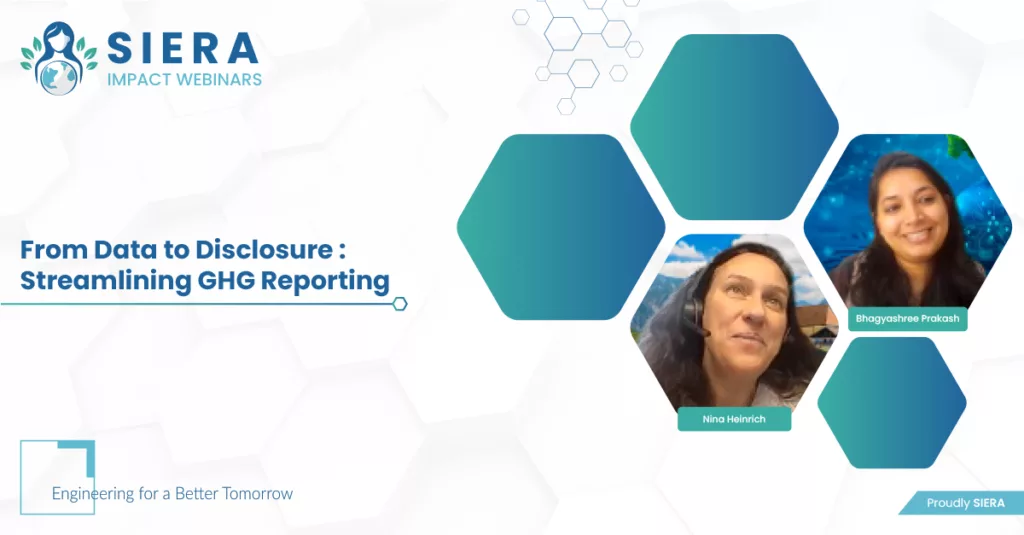
The SIERA Academy – Impact Series explores the urgent challenges and opportunities shaping sustainability, environmental engineering, and ESG transformation. In the recent session, Tech-Driven Waste Diversion, experts of the SIERA Alliance examined how companies across the EU can streamline CSRD, ESRS, EU Taxonomy, and emissions reporting through one unified platform. This blog highlights key challenges, regulatory drivers, and technology-enabled solutions that help organizations strengthen compliance and accelerate climate impact.
1. Why Centralizing ESG, Emissions & Compliance Matters
Companies across Europe struggle with fragmented sustainability and compliance processes. Data is often scattered across spreadsheets, departments, and suppliers—leading to slow reporting, low accuracy, and misalignment with CSRD/ESRS requirements.
Key Challenges
According to the webinar material:
- Data silos create inefficiencies and delay disclosures.
- Manual activities introduce errors that weaken audit readiness.
- Only 29% of EU firms trust their ESG data accuracy—highlighting the market-wide reliability gap (EY, 2022).
- Over 60% struggle with materiality and data quality, affecting CSRD readiness.
These gaps underscore the need for a single source of truth that integrates carbon accounting, ESG KPIs, EU taxonomy indicators, and compliance documentation into a unified, automated structure.
2. Regulatory Drivers Strengthening the Case for a Unified Platform
With stricter sustainability standards across the EU, companies are now required to produce detailed, structured, and machine-readable disclosures.
Key Regulatory Requirements
- CSRD: Mandatory standardized sustainability reporting.
- ESRS: Double materiality, structured ESG disclosures, and topic-specific guidance.
- EU Taxonomy: Requires classification of CAPEX, OPEX, and revenue according to sustainability criteria.
- GHG Protocol (Scope 1–3): Ensures transparent and comparable climate reporting.
- ESEF/iXBRL: Machine-readable digital reporting mandated for listed entities.
These drivers push organizations toward automation, standardization, and integrated software solutions capable of real-time monitoring.
3. Opportunities: The Business Case for Integration
Unified ESG and compliance platforms unlock significant benefits across operations, strategy, and stakeholder communication.
Top Four Opportunities Identified
| Opportunity | Added Value |
| 1. One Source of Truth for ESG Data | 40% faster ESG disclosures; up to 30% lower compliance costs. |
| 2. Smarter Data Collection & Engagement | Automated surveys, consistent inputs, value-chain-wide coverage. |
| 3. Simplified Compliance & Reporting | Audit-ready CSRD/ESRS reports with machine-readable formats. |
| 4. Focused ESG Priorities via Double Materiality | Clear strategic focus and ESRS-aligned prioritization. |
For organizations working with EUTECH – powered by SIERA, these opportunities translate into better efficiency, transparency, and competitive advantage.
4. The Solutions: Technology That Transforms ESG & Compliance
The webinar outlines five integrated solution pillars that enable organizations to shift from manual reporting to real-time, automated sustainability management.
1. Unified ESG & Compliance Dashboard
A central hub that consolidates sustainability, emissions, and compliance data, enabling leaders to:
- Track ESG and emissions performance in real time
- Conduct automated gap analyses
- Respond quickly to evolving CSRD/ESRS/TAX updates
2. Automated Data Collection & Stakeholder Engagement
A digital ESG data hub streamlines information gathering across both internal teams and external suppliers.
- ESRS-aligned survey tools
- Departmental automation
- Value-chain engagement
3. Advanced Compliance & Reporting Tools
These tools automate the creation of CSRD/iXBRL-ready reports with EU taxonomy integration.
- Automated CAPEX/OPEX classification
- Machine-readable structured data
- Clear, transparent reporting that strengthens investor trust
4. Materiality & Impact Analysis
Automated double materiality assessments identify:
- Financially material ESG risks
- Societal and environmental impacts
- Strategic ESG opportunities aligned with ESRS
5. SustainSuite – part of SIERA
A subscription-based solution supporting:
- Real-time GHG monitoring
- ESG scoring and optimization
- Unified reporting dashboards
5. The Future of ESG & Compliance: One Platform, One Report
The SIERA Academy’s Tech-Driven Waste Diversion session demonstrates how the shift to integrated, automated ESG platforms is no longer optional—it is essential for regulatory compliance and operational efficiency.
By adopting unified solutions such as SustainSuite – part of SIERA, organizations can:
- Deliver accurate, audit-ready reporting
- Strengthen climate and circular economy performance
- Reduce manual workload and compliance risks
- Build trust with investors, customers, and regulators
Call to Action
Companies across the EU are entering a decisive period of sustainability transformation. To stay compliant and competitive:
👉 Book a consultation with experts of the SIERA Alliance
👉 Join the EUTECH – powered by SIERA Impact Series
👉 Sign up for upcoming sessions & download exclusive whitepapers
Together, we build Engineering for a Better Tomorrow.