

Restoring Watercourses in Thuringia: How Nature-Based River Development Strengthens Ecosystems and Communities
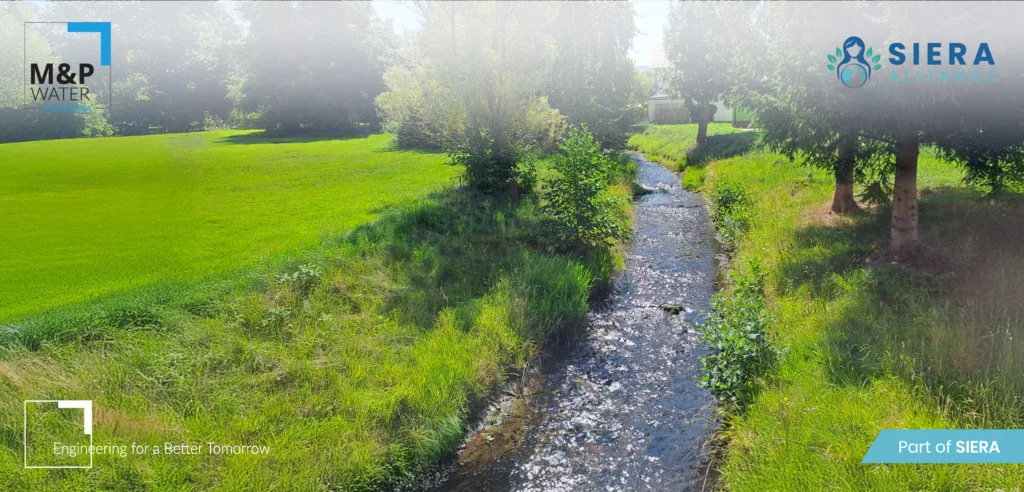
Across Thuringia, watercourses such as the Linderbach, Gramme and Erbstrom are at the centre of ambitious ecological development initiatives. Although these rivers belong to the second-order watercourse system, their environmental relevance is far greater—they shape local biodiversity, influence flood dynamics, and serve as vital ecological corridors in a landscape marked by agriculture and settlement structures. Under the Thuringian State Programm for Water Protection 2022–2027, M&P Water GmbH – part of SIERA is supporting the Watercourse Maintenance Associations Gera/Gramme and Hörsel/Nesse in implementing essential measures aligned with the EU Water Framework Directive (EU-WFD).
These interventions mark an important shift: from historically engineered, heavily regulated channels toward resilient, dynamic river landscapes that function more naturally and provide lasting public and ecological benefits.
From Engineered Channels to Living Rivers
Many river sections in the region have undergone significant anthropogenic alteration over the last century. Straightening, deepening and hard bank structures were once considered efficient solutions for flood management and agricultural land gain. However, these modifications heavily disrupted natural flow conditions, limited habitat diversity, and weakened the ecological performance required under the EU-WFD.
Current on-site analyses show typical impacts of these modifications:
- Straightened sections that reduce natural variability such as meanders, riffles and pools
- Deepened channels that disconnect rivers from their floodplains and impair groundwater interaction
- Heavily sun-exposed reaches that elevate water temperatures and reduce habitat quality
- Hard engineering structures such as bank reinforcements that eliminate spawning and shelter zones
For rivers like the Erbstrom or the Gramme, these conditions represent both ecological and hydromorphological deficits. Restoring them requires precise and holistic planning—a process that M&P Water GmbH and the wider M&P Group part of SIERA have specialized in for many years.
Ecological Enhancement Measures: Creating Space for Natural Processes
The core of the Thuringian river development efforts lies in promoting natural river behavior. Instead of forcing watercourses into rigid geometries, the goal is to create the space and structural diversity rivers need to evolve through their own dynamics.
Key implementation measures include:
- Removal of Bank Protection Structures
Dismantling artificial embankments opens the channel to more natural movement and enables lateral erosion, sediment deposition and vegetation growth. These processes form the basis for diverse microhabitats essential for fish, invertebrates and riparian species.
- Selective Widening of Watercourse Profiles
Allowing the channel to widen supports natural flow distribution and helps establish shallow, low-flow areas—important safe zones during high discharge events and attractive spawning grounds.
- Preservation and Development of Riparian Woodlands
Watercourse-typical tree species stabilize banks naturally, provide shade, slow down overheating in summer periods, and contribute organic material that enriches aquatic food webs.
- Establishing Alluvial Forest Structures
By actively initiating alluvial forest vegetation within development corridors, long-term ecosystem resilience is strengthened. These areas act as buffer zones, reduce nutrient inflow, improve floodplain connectivity and increase biodiversity at the landscape scale.
- Promoting Self-Dynamic River Processes
A fundamental ecological principle: rivers function best when they can develop through their own energy and adapt to changing conditions. This approach is essential for achieving the “good ecological status” required by the EU-WFD.
Together, these measures transform formerly uniform channels into complex ecosystems. They also improve flood resilience, as natural floodplains and vegetation structures help retain water and slow peak discharge events.
Why M&P Water’s Expertise Matters for Sustainable River Development
The measures underway in Thuringia reflect exactly the kind of interdisciplinary, nature-based approach that defines M&P Water – part of SIERA. With long-standing experience in hydrology, hydraulic engineering, renaturation planning and integrated water resource management, M&P Water brings together all key competencies needed to implement sustainable river development—from analysis through to execution.
Drawing on the expertise of M&P Water, project partners benefit from:
→ Comprehensive Hydromorphological Assessments
Detailed evaluations of flow characteristics, sediment dynamics, riverbed structures and ecological potentials form the basis for tailored solutions.
→ State-of-the-Art Planning and Modelling
Hydraulic and numerical models enable planners to simulate river behavior, assess risks and verify the ecological effectiveness of proposed measures.
→ Expertise in Nature-Based Engineering Solutions
The team prioritizes natural materials, vegetation engineering and geomorphological principles to enhance ecological functions with minimal intervention.
→ Interdisciplinary Coordination with Stakeholders
Authorities, municipalities, watercourse associations, farmers and local communities benefit from clear communication and adaptive project management.
→ Robust Implementation Support
From construction supervision to monitoring success indicators, M&P Water ensures that every measure delivers the intended ecological uplift.
This integrated approach is essential when working with complex river systems where ecology, engineering, planning and regulatory requirements intersect.
A Catalyst for Biodiversity and Climate Resilience
The ongoing work along Linderbach, Gramme and Erbstrom does more than restore habitats for regionally important species. It also strengthens local climate adaptation capacities. Cooler water temperatures, improved floodplain connectivity, and increased structural diversity contribute to:
- Reduced heat stress in summer months
- Enhanced flood protection through natural retention
- Increased biodiversity across aquatic and riparian habitats
- Better groundwater interaction and water balance
- Greater resilience against extreme weather events
These benefits extend beyond ecological gains—they support agricultural productivity, community safety, and long-term land use stability.
Conclusion: Rivers With a Future
The watercourse development projects in Thuringia demonstrate what is possible when ecological principles, technical competence and long-term vision come together. By giving rivers space to behave naturally, communities benefit from more resilient landscapes, restored ecosystems and improved water quality.
Ready to Restore Your Watercourse? Let’s Build Resilient River Landscapes Together.
Whether you are responsible for local water management, planning ecological development, or seeking sustainable solutions for regulated watercourses:
M&P Water – part of SIERA is ready to support you with comprehensive expertise in hydrology, renaturation and nature-based hydraulic engineering.
👉 Explore our services and get in touch
Let’s create water systems that are fit for the future.