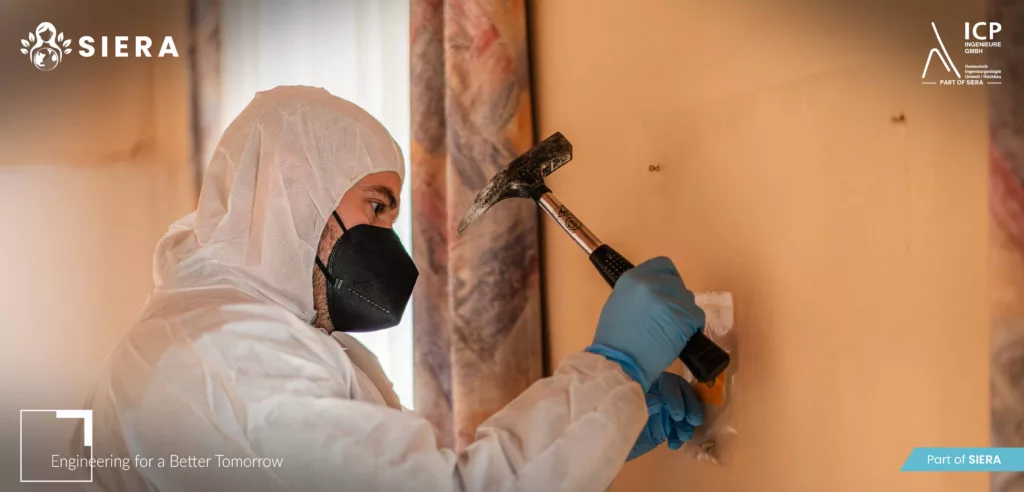



Brownfields are no longer just remnants of past industrial activity, they are becoming a central pillar of sustainable land use, climate strategy, and urban resilience. Across Europe, decision-makers are rethinking how underutilized land can support long-term environmental and economic goals.
This formed the foundation of the SIERA Impact Webinar on 22 January 2026, titled “Rethinking Brownfields: Unlocking Hidden Potential & Managing Them Holistically with SIERA”, presented by Raphael Thieβen. As part of the SIERA Impact Webinar Series, the session brought together experts from across the SIERA Alliance to explore how integrated environmental engineering enables successful brownfield transformation.
The SIERA Impact Webinars, organized by SIERA Academy, are designed to translate complex environmental, engineering, and regulatory challenges into actionable insights—always guided by SIERA’s mission: Engineering For A Better Tomorrow.
Why Brownfields Matter More Than Ever
Urban growth, climate targets, and regulatory pressure are converging, forcing cities and regions to reconsider how land is used. Brownfields are emerging as a strategic solution to multiple challenges at once.
Across Germany and the EU, several key trends highlight the urgency of brownfield redevelopment:
- Ongoing land consumption of approximately 51 hectares per day for settlement and transport infrastructure
- An estimated 150,000 to 176,000 hectares of unused or underutilized land
- Binding climate neutrality targets by 2050 at national and EU level
Against this backdrop, brownfields offer a path toward inward development—reducing emissions, protecting greenfield land, and strengthening urban resilience.
From Liability to Resource: The Brownfields 2.0 Approach
Traditional brownfield remediation often focuses narrowly on contamination. Brownfields 2.0 expands this perspective by embedding remediation into a broader framework of sustainability, infrastructure, and long-term value creation.
This approach requires coordination across disciplines and stakeholders, which is where SIERA’s integrated model becomes essential.
SIERA: Where Environmental Expertise Meets Engineering Precision
Transforming brownfields at scale demands more than individual technical solutions—it requires an alliance-based approach that brings multiple competencies together under one strategic framework.
SIERA is an integrated environmental engineering network comprising 14 specialized engineering firms, working together as one alliance. This structure allows SIERA to address complex projects holistically while maintaining deep technical excellence.
SIERA’s expertise spans the full environmental impact spectrum:
- Infrastructure – Sustainable and future-ready infrastructure solutions
- Urban Sustainability – Greener, more resilient cities
- Climate – Emissions reduction and climate resilience strategies
- Ecosystems – Biodiversity protection and land restoration
- Circular Economy – Resource efficiency and reuse
- Environmental Protection – Clean air, water, and healthy soils
- Water – Integrated flood and water management
- Impact Technologies – Digital tools that turn data into measurable impact
Key Challenges in Brownfield Development
Every brownfield site comes with its own legacy, making redevelopment inherently complex. These challenges often extend beyond environmental issues into regulatory, financial, and social dimensions.
Common challenges include:
- Historical contamination and legacy pollutants
- Fragmented data and unclear responsibilities
- Lengthy approval processes and regulatory uncertainty
- Alignment with ESG, EU Taxonomy, and Green Deal requirements
- Balancing environmental, social, and economic objectives
Without a coordinated strategy, these factors can delay or derail projects entirely.
SIERA’s End-to-End Brownfield Solution
To manage complexity effectively, brownfield redevelopment must follow a structured, end-to-end process rather than isolated interventions.
The webinar presented SIERA’s End-to-End Brownfield Model, which integrates all project phases under one coordinated framework.
From Assessment to Implementation—One Partner, One Strategy
SIERA supports brownfield projects across their entire lifecycle, ensuring continuity and accountability at every stage:
- Site assessment and risk evaluation
- Remediation and environmental engineering
- Infrastructure and energy concepts
- Climate, ESG, and financial integration
- Urban planning and redevelopment
- Long-term asset performance and value creation
This approach ensures projects are not only compliant, but also resilient, financeable, and future-proof.
Real-World Impact: Brownfield Success Stories
Practical case studies formed a core part of the webinar, demonstrating how theory translates into measurable results when projects are managed holistically.
Heilbronn – Neckarbogen & BUGA 2019
A former industrial brownfield was transformed into a vibrant, sustainable urban district as part of BUGA 2019, setting new benchmarks for integrated site development.
Achern – Former Glassworks Site
Through biological remediation techniques, a contaminated industrial site was restored and prepared for sustainable reuse while minimizing environmental impact.
Emscherland (2020) – Ecological Renaturation
Large-scale renaturation transformed degraded land into functioning ecosystems, restoring biodiversity and strengthening regional climate resilience.
Railway Brownfields to Urban Quarters
Projects such as Neue Meile Lübeck, Lok Viertel Osnabrück, and Illmenaugarten Lüneburg illustrate how former railway sites can be repurposed into thriving urban neighborhoods.
Datteln Süd & Rostrup
Heavily burdened industrial and military sites were successfully revitalized through integrated management of contamination, waste, and unexploded ordnance.
Each project underscores the same conclusion: end-to-end coordination is the decisive success factor.
Brownfields as a Strategic ESG Lever
Brownfield redevelopment is not only an environmental task, it is a strategic instrument for ESG performance and long-term resilience.
Well-managed brownfield projects contribute directly to:
- ESG performance and reporting requirements
- EU Taxonomy alignment
- Access to sustainable finance
- Long-term asset stability and value creation
SIERA ensures ESG considerations are embedded from the outset, supporting credibility, transparency, and regulatory compliance.
Why Organizations Choose SIERA
Organizations increasingly seek partners who can navigate complexity without fragmenting responsibility. SIERA’s alliance-based model provides exactly that.
Key differentiators include:
- One integrated alliance covering multiple disciplines
- Proven environmental engineering expertise
- Strategic alignment with climate, ESG, and financial goals
- Extensive experience across municipalities, infrastructure, and industry
This is how SIERA transforms complex brownfield challenges into sustainable outcomes.
Join the Conversation: SIERA Impact Webinars
The SIERA Impact Webinar Series continues to explore how environmental engineering enables real-world impact across brownfields, climate, infrastructure, and ESG.
Each webinar brings together expertise from the SIERA Alliance, offering practical insights, case studies, and strategic perspectives for decision-makers and practitioners.
Register for the Next SIERA Impact Webinar
Gain expert insights into sustainable land development, climate strategy, and environmental engineering by joining our upcoming webinar.
If you are planning a brownfield redevelopment project, contact SIERA to learn how our end-to-end approach can support your goals—from assessment to long-term value creation.
SIERA – Engineering For A Better Tomorrow.