

Introduction: Engineering for a Better Tomorrow
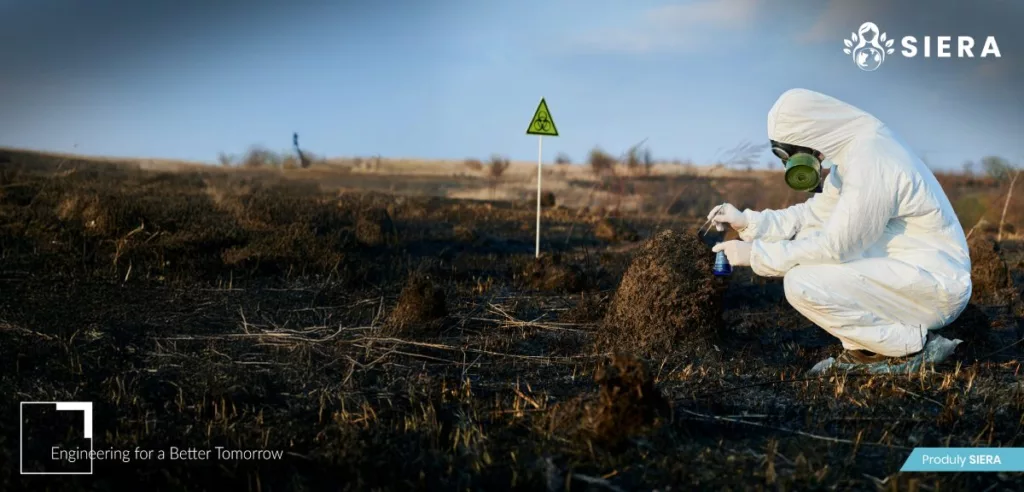
Across Europe, millions of hectares of soil remain burdened by legacy contamination — from industrial waste to military residues. But in the latest SIERA Impact Webinar, Soil Remediation in Practice, experts across the SIERA Alliance explored how data-driven remediation, microbial innovation, and circular land reuse can transform this challenge into opportunity.
- The Foundation of Uncertainty: Why Soil Remediation Still Faces Barriers
Despite advances in soil science, remediation remains unpredictable. Variability in soil composition, contaminant type, and microbial ecosystems introduces risk and complexity. Ex-situ methods, which require excavation and off-site treatment, can cost three to five times more than in-situ alternatives — while also disturbing soil ecology. At the same time, a lack of real-time monitoring means soil recovery can only be assessed in snapshots. Seasonal changes further distort results, and post-remediation verification often lags reality.
Key Insight: Fragmented EU policies and inconsistent frameworks prevent coordinated progress — underscoring the need for unified soil health standards under the EU Soil Strategy for 2030.
- From Waste to Resource: Circular Soil Reuse
Even after successful treatment, remediated soil is often discarded as waste, undermining Europe’s circular economy ambitions. Few standardized pathways exist to certify decontaminated soil for reuse in green infrastructure or landscaping, and public skepticism remains a key barrier.
SIERA experts emphasize that validated soil circularity—supported by risk assessment and stabilization (e.g., lime, biochar, or cement)—can divert tonnes of material from landfill. Reused soils can reduce CO₂ emissions and material extraction in construction and urban greening.
| Soil Reuse Benefit | Impact |
| Reduced landfill waste | -40% disposal volume |
| Lower carbon footprint | -25% CO₂ emissions |
| Urban greening material reuse | +30% cost efficiency |
- In-Situ Bio-Remediation: Nature’s Own Detox System
Microbial-based remediation, or bio-augmentation, uses native or engineered microbes to degrade hydrocarbons and immobilize heavy metals directly on-site. This low-disruption approach preserves biodiversity and soil structure — critical for sustainable brownfield regeneration.
When combined with IoT-enabled Smart Monitoring, these methods enable ongoing tracking of pH, pollutant breakdown, and nutrient cycles, enhancing transparency and CSRD compliance.
- Smart Monitoring & Data-Driven Restoration
The transition from manual fieldwork to IoT- and satellite-based soil monitoring marks a paradigm shift. Connected sensors deliver continuous data on moisture, pH, and contaminant levels to cloud dashboards. These insights reduce verification costs and align remediation outcomes with ESRS indicators and the EU Soil Health Mission.
SustainSuite – part of SIERA – powers this transition
- Data-Driven Compliance: Models subsurface variability and contamination plumes.
- Impact Tracking: Digital twins simulate remediation outcomes and ESG performance.
- ESG Optimization: Evaluates co-benefits such as land reuse, biodiversity protection, and carbon savings.
- Aligning Policy, Practice, and Planning
By merging climate modeling, geotechnical data, and ecosystem design, SIERA member companies help Europe meet EU Soil Mission targets while accessing green funding opportunities. Integrated approaches strengthen links between CAP, WFD, and local resilience planning — making soil restoration both compliant and future-proof.
Conclusion: Building Resilience from the Ground Up
Soil remediation is no longer just about cleanup — it’s about regeneration. Through microbial innovation, data intelligence, and circular design, SIERA member companies are redefining how Europe approaches land rehabilitation.
“A time of crisis is a time of opportunity.”
Book a Consultation: Get tailored remediation and CSRD guidance from experts of the SIERA Alliance.
Partner with SIERA & SustainSuite: Streamline sustainability reporting with integrated monitoring and ESG analytics.
Join the SIERA Impact Series: Register via the EUTECH Event Calendar to learn from leading environmental engineers.
Always true to our mission: Engineering for a Better Tomorrow.