
Siera Alliance

Soil mechanics laboratory analyses for reliable building site assessments

Blog post ()

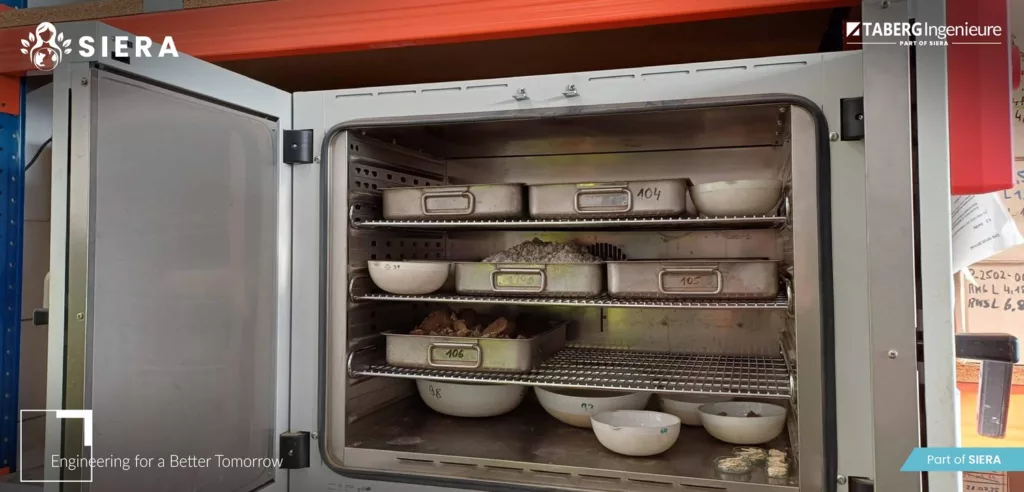
The basis for a reliable building ground assessment is created through the close integration of field investigations and soil mechanical laboratory analyses. Samples are examined in accordance with current standards in the in-house soil mechanical laboratory of TABERG Ingenieure GmbH – a member of the SIERA Alliance. The combination of modern measurement technology, structured processes, and many years of experience ensures that precise and traceable results are achieved – in line with the principle of Engineering for a Better Tomorrow.

Role of soil mechanics laboratory values in building site assessment

Soil mechanics parameters form the central basis of any building site assessment. Only the combination of results from field investigations and laboratory tests enables a realistic assessment of soil behavior.

Professional sampling, complete documentation, and standard-compliant testing ensure reliable data that can be directly integrated into planning and decision-making processes. These values reveal how load-bearing, plastic, or water-sensitive a soil is – crucial information for any foundation planning.

Overview of laboratory procedures

Our laboratory carries out a wide range of soil mechanics tests, including:

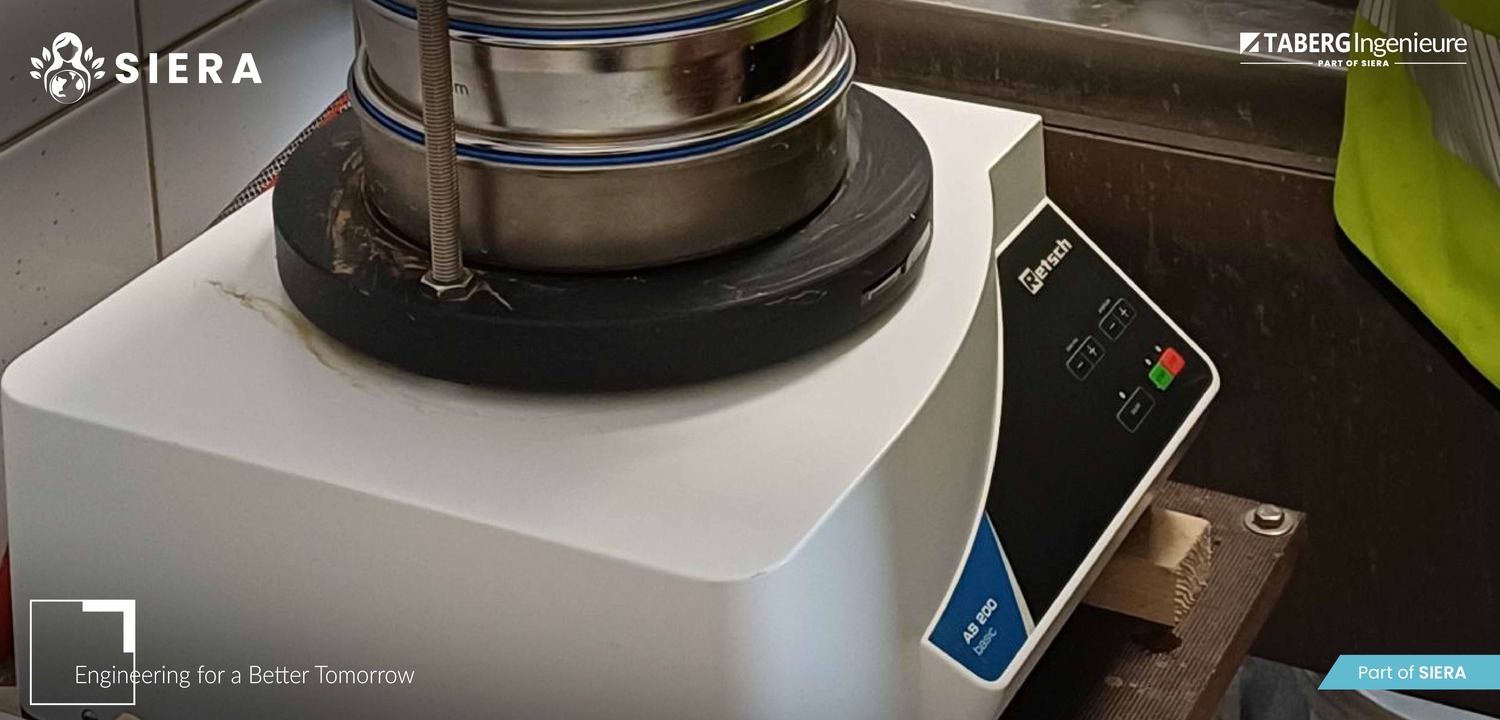
  • Grain size distributions (sieve and slurry analysis): provide a detailed picture of the grain composition and structure of the soil.
  • Atterberg limits: provide information about the plasticity and behavior of the soil under load.
  • Compaction tests (Proctor): determine the optimum soil density
  • Water content and density determinations: provide important parameters for static calculations and supplement the geotechnical evaluation.

These tests enable a reliable assessment of key soil parameters, which are essential for any building site evaluation.
Procedure and quality assurance

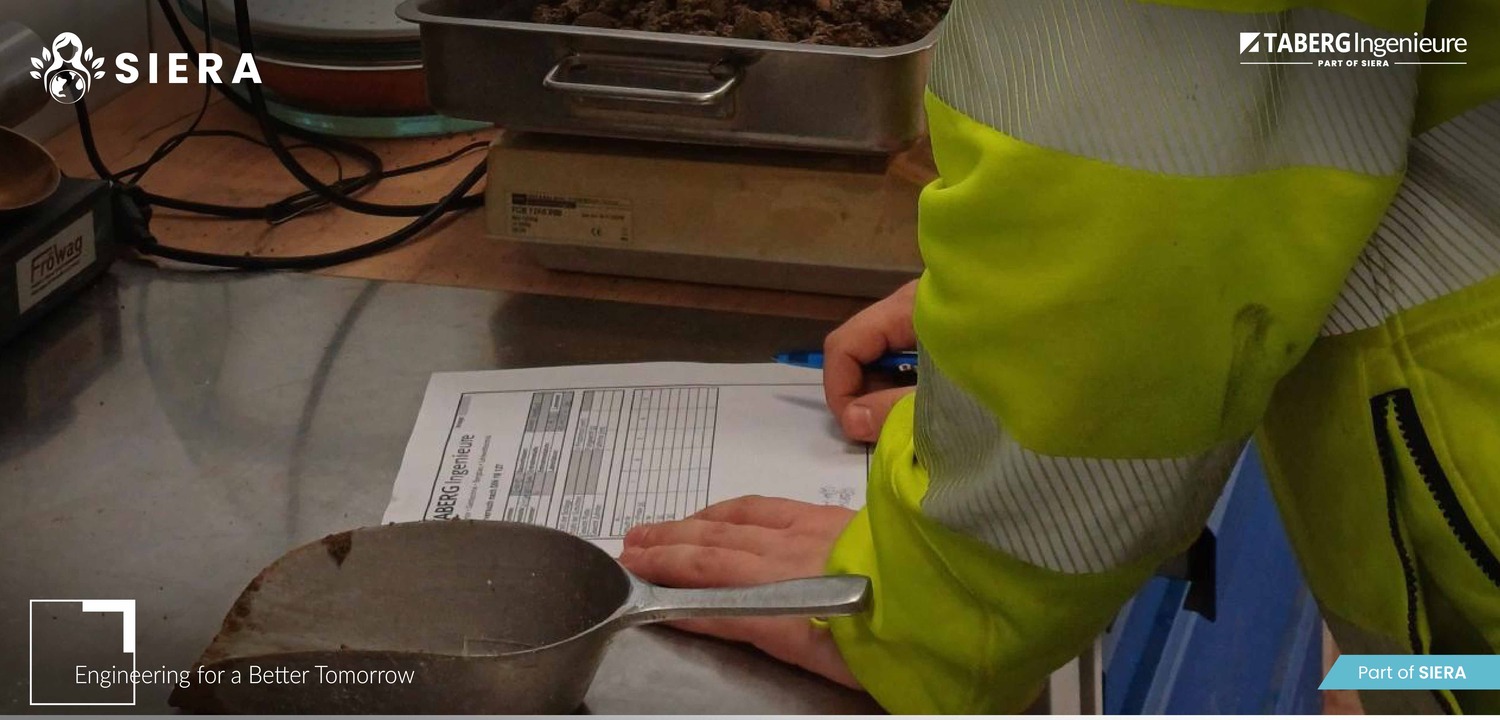
A structured process chain ensures that every sample can be reliably evaluated. Close cooperation between drilling teams and the laboratory guarantees that samples are taken correctly, fully documented, and examined in accordance with standards.
The results are presented in a clear and comprehensible manner and transferred to the expert or engineering evaluation processes. This produces consistent, comparable, and traceable results—even in complex or heterogeneous site conditions.

Significance for planning and project safety

Soil mechanics laboratory values are of great importance for all project participants: engineers, architects, builders, and project managers receive a reliable and comprehensible basis for their decisions. Risks in the building ground can be identified at an early stage, suitable foundation types can be selected, and necessary soil improvement measures can be planned precisely.
The main advantages include:

  • Early detection of building site risks
  • Well-founded recommendations for foundations
  • Required parameters for static design
  • Direct transfer of results into planning documents
  • Clear and comprehensible presentation for all parties involved

This ensures that construction projects can be realized safely, economically, and sustainably.
Conclusion

Soil mechanics laboratory results are an essential part of a reliable building site assessment. Standardized testing, clear documentation, and professional evaluation provide a solid foundation that supports stability, safety, and efficiency in planning. They ensure that decisions are based on verifiable and tested data.

TABERG Ingenieure GmbH—a member of the SIERA Alliance—is at your service for precise soil mechanics laboratory analyses and a secure basis for decision-making.
Contact our team and put your project on a verified, standard-compliant data basis—in the spirit of Engineering for a Better Tomorrow.
Facebook
Twitter
LinkedIn

Other Blogs

JOIN OUR FREE WEBINARS FOR VALUABLE INSIGHTS FROM OUR ENVIRONMENTAL ENGINEERS

A Message from the Founder: Florian von Tucher

In the mid-2000s my involvement in development aid took me to some of the most remote and impoverished regions of the world. 

Northern Tibet, Mongolia, and Western China – where I was involved with the implementation of decentralised wastewater treatment systems, I realised I needed a deeper purpose. Though I later found success in real estate development, the desire to make a lasting impact never left me.  

A pivotal moment occurred when I was invited to Ghana by my friend and mentor, Cardinal Peter Turkson, who was the head of the Dicastery for the Promotion of Integral Human Development of the Catholic Church at the time. He has since been appointed the Pontifical Chancellor of the Academy of Sciences and the Pontifical Chancellor of Social Sciences.  

Cardinal Turkson had a profound influence on me. His invitation gave me the opportunity to witness firsthand the development needs of the country. We reflected on my experiences in China, and together, we envisioned a model of development that would take root in one community and gradually expand. We believed that small, strategic steps could lead to lasting transformation – just like the biblical parable of the mustard seed, which grows into something far greater than its humble beginnings. 

Cardinal Turkson’s steadfast belief in this vision and encouragement became the base upon which the Mustard Seed Foundation was built. His unwavering support, wisdom, and guidance helped shape not just the mission of the Foundation, but my personal journey as well. 

With the encouragement of the Cardinal and the Integral Human Development (IHD) office, we initially operated with the IHD before establishing the Mustard Seed Foundation as a stand-alone organisation in Germany. We have been fortunate to receive support from numerous European donors, a humble reminder that our mission is not just about individual efforts – it is about collective impact. 

Collaboration has been a cornerstone of our work. We have partnered with organisations like Caritas and Rotary International to extend our reach. One of our most impactful collaborations has been with M&P Group, who donate their engineering concepts, project supervision, and high-quality technical execution, allowing 100% of donor contributions to go into the projects themselves. 

One such initiative is the Clean Water Initiative, launched in partnership with M&P Group. In 2024, we completed a well in Ndoss, Senegal, significantly improving agricultural efficiency and empowering the local community. This project epitomises our commitment to sustainable solutions – starting with clean water and gradually building infrastructure that supports long-term development. 

Our work aligns closely with the United Nations Sustainable Development Goals (SDGs), focusing on poverty alleviation, economic empowerment, environmental sustainability, and humanitarian aid. Our model is simple but effective: start with one project and expand, year by year, to create an ecosystem of support. A water well leads to a school, which leads to renewable energy solutions, which, in turn, fosters economic opportunities. Over time, these efforts cumulatively transform entire regions. 

The Mustard Seed Foundation is a testament to what can be achieved with nothing more than a vision, a strong commitment, and the faith of a mustard seed. Yet, none of this would have been possible without the belief and encouragement of Cardinal Peter Turkson. His unwavering faith in our mission gave me the courage to persevere through challenges and continue expanding our impact. As we continue our work, we remain driven by the belief that small beginnings can yield great outcomes, inspiring hope and lasting change in the communities we serve. His legacy of faith, vision, and commitment to human dignity is deeply woven into every initiative we undertake.